How the American Power Grid Works — and Why It’s Under Pressure
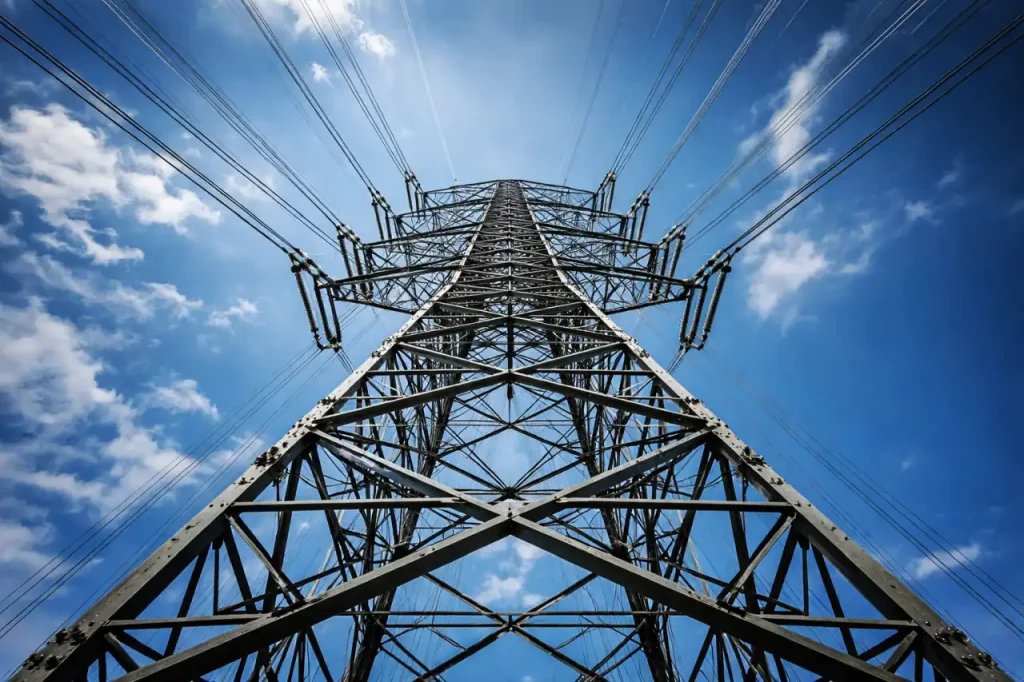
Looking up from beneath a transmission tower reveals the immense engineering scale required to move electricity across long distances.
Introduction: The Invisible System Behind Modern Life
Every moment of modern life depends on an invisible system that most people rarely consider. When you turn on a light, charge your phone, or open your refrigerator, electricity arrives instantly and effortlessly. Behind that simplicity lies one of the most complex engineering achievements in human history: the American power grid. This vast, interconnected network links power plants, transmission systems, and local distribution infrastructure across thousands of miles, delivering energy continuously to hundreds of millions of people. For decades, it has operated with remarkable reliability, quietly supporting homes, businesses, hospitals, and entire cities. Yet today, the system is facing increasing pressure from forces it was not originally designed to handle, including extreme weather, aging infrastructure, and rapidly growing demand.
Understanding how the grid works provides essential context for understanding why these pressures matter, and why the reliability of electricity has become an increasingly important topic across the United States.
Electricity Begins at Power Plants
The journey of electricity begins at generation facilities, where energy from natural resources is converted into electrical power. These facilities use a range of energy sources, including natural gas, nuclear reactions, flowing water, wind, and sunlight. In most cases, electricity is produced by spinning turbines connected to generators, converting mechanical energy into electrical current. Once generated, this electricity leaves the power plant at extremely high voltages. High voltage is necessary because it allows electricity to travel long distances efficiently, reducing energy loss during transmission. Power plants are often located far from the communities they serve, so the ability to move electricity across vast regions is essential to ensuring a stable and continuous supply.
This initial stage represents only the beginning of a much larger system designed to move electricity safely and efficiently across the country.
Transmission Moves Electricity Across Regions
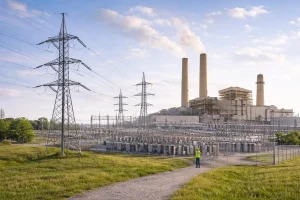
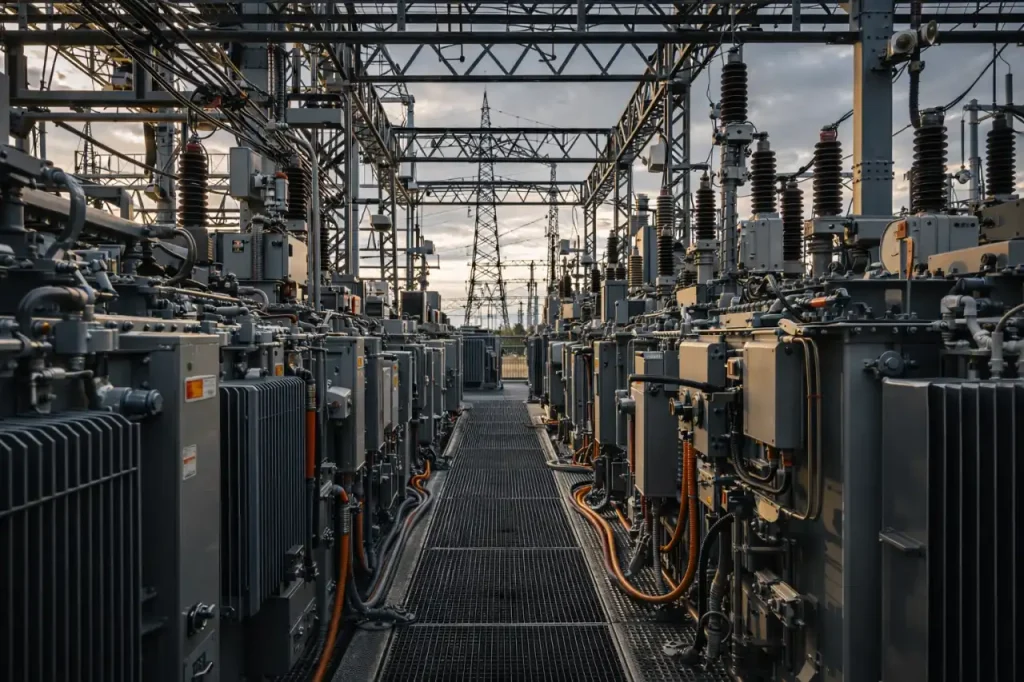
After electricity is generated, it enters the transmission system, which forms the backbone of the power grid. Transmission lines, supported by large steel towers or poles, carry electricity across cities, states, and entire regions. These lines operate at extremely high voltages, often hundreds of thousands of volts, allowing electricity to move quickly and efficiently over long distances. Along the way, substations play a crucial role in managing the flow of electricity. These facilities regulate voltage levels, redirect power as needed, and ensure the system remains balanced and stable.
The transmission network allows electricity generated in one location to supply power to distant communities, creating a flexible and interconnected system capable of responding to changing demand throughout the day.
Distribution Brings Electricity to Individual Homes
Once electricity reaches local areas, it enters the distribution system, which delivers power directly to homes and businesses. This is the portion of the grid most visible in everyday life, consisting of utility poles, neighborhood transformers, and underground cables. Transformers reduce the high transmission voltage to lower levels that are safe for residential and commercial use. From there, electricity flows into individual buildings, powering appliances, lighting, heating, cooling systems, and electronic devices.
This entire process, from generation to final use, occurs continuously and almost instantly. The seamless nature of this system often makes it easy to overlook the complexity involved in delivering electricity safely and reliably.
The Grid Must Remain Balanced at All Times
One of the most challenging aspects of operating the power grid is maintaining balance between supply and demand in real time. Electricity cannot be easily stored in large quantities using traditional infrastructure, so it must be produced exactly when it is needed. Grid operators constantly monitor conditions and adjust generation levels to match consumption. If supply falls short of demand, voltage levels can drop, potentially leading to service interruptions. If supply exceeds demand, it can place stress on equipment and reduce system stability.
This continuous balancing act requires precise coordination across thousands of facilities and millions of miles of infrastructure, making the grid one of the most carefully managed systems in modern society.
Much of the Infrastructure Is Decades Old
A significant portion of the American power grid was built in the mid-20th century, during a period of rapid economic growth and expanding electrification. While ongoing maintenance and upgrades have helped extend the lifespan of many components, aging infrastructure naturally becomes more vulnerable over time. Transmission lines, transformers, and substations that have operated for decades may be less resilient to stress and environmental conditions than newer equipment. Maintaining such a vast and aging network presents an ongoing challenge, particularly as demand continues to grow and environmental conditions become more unpredictable.
The age of the infrastructure does not mean it is failing, but it does mean that careful management and modernization are increasingly important.
Rising Energy Demand Is Increasing the System’s Workload
Modern life requires far more electricity than in previous generations. Air conditioning, once considered a luxury, is now common in most homes. Electronic devices, home offices, and digital infrastructure have significantly increased overall consumption. The growth of electric vehicles and new technologies is adding further demand. Population growth has also contributed to increased energy use, requiring the grid to serve more people and more devices than ever before.
These changes have gradually increased the workload placed on the system, requiring continuous adaptation and expansion to meet evolving needs.
Extreme Weather Is Creating New Challenges
Weather has always affected electrical infrastructure, but extreme events are becoming more frequent and more severe. High winds can damage power lines, ice can accumulate on equipment, and flooding can affect substations. Heat waves increase electricity demand as cooling systems operate continuously, placing additional strain on the grid. Wildfires and storms can also disrupt infrastructure directly or require preventative shutdowns to protect equipment and communities.
These events highlight the importance of resilience and preparedness within the system, as operators work to maintain reliability under increasingly challenging conditions.
The Grid Is Evolving Alongside Modern Society
The power grid was originally designed for a simpler energy landscape, where electricity flowed in one direction from large power plants to consumers. Today, the system is becoming more dynamic and complex, reflecting changes in how electricity is generated and used. This evolution requires new approaches to infrastructure management, planning, and operation. Adapting such a large and interconnected system takes time, and during periods of transition, the grid may experience increased stress as it adjusts to new realities.
Despite these challenges, the system continues to function as one of the most reliable electrical networks in the world.

Conclusion: A System That Supports Everyday Life
The American power grid is an extraordinary achievement that supports nearly every aspect of modern life. It operates continuously, balancing supply and demand while delivering electricity across vast distances with remarkable efficiency. For generations, it has provided the foundation for economic growth, technological advancement, and daily comfort. However, like any complex system, it faces challenges as conditions change and demand increases.
Understanding how the grid works reveals not only its complexity, but also its importance. It is a system that most people never see, yet rely on constantly. Its reliability has shaped modern life, and its continued evolution will play a critical role in the future of energy in the United States.