The Basics of Backup Power for Beginners

Moonlight can provide natural illumination even when electric power is unavailable.
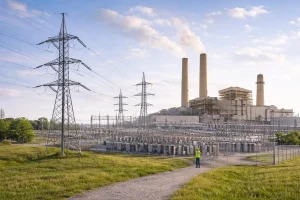
For most of modern history, electricity has been something people rarely thought about until it disappeared. It flows silently through wires, powering homes, preserving food, regulating temperature, and keeping people connected to the world. But when that invisible current suddenly stops, the absence is immediate and deeply disruptive. In those moments, backup power stops being an abstract concept and becomes something tangible — a bridge between normal life and temporary uncertainty.
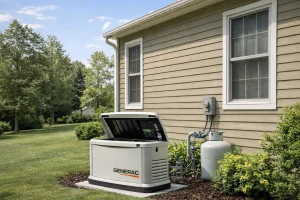
Backup power, in its simplest form, refers to any system capable of supplying electricity when the main grid is no longer available. Its purpose is not necessarily to replace the grid permanently, but to provide continuity. This continuity can be brief, lasting minutes, or extend for hours or even days, depending on the system and the situation. What matters most is that essential functions continue to operate, allowing households to maintain stability during interruptions that might otherwise bring daily routines to a halt.
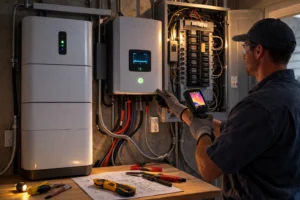
The principle behind backup power is relatively straightforward. Electricity is either generated independently or stored in advance, then used when needed. This stored or alternative energy can power selected devices, specific areas of a home, or in some cases, entire households. The scale varies widely, but the objective remains consistent: to provide a reliable alternative when the primary source fails. Over time, improvements in technology have made these systems more efficient, quieter, and easier to integrate into everyday environments.
One of the most important aspects of backup power is selectivity. During an outage, not everything needs to operate at once. Most households prioritize essential functions such as refrigeration, basic lighting, communication devices, and heating or cooling systems depending on the season. This selective approach allows backup power to be used more efficiently, extending its duration and usefulness. Rather than attempting to replicate normal consumption entirely, backup systems are often designed to preserve comfort and safety until grid power is restored.

Backup power has become increasingly relevant as homes themselves have become more dependent on electricity. Many devices that were once optional are now central to daily life. Internet connectivity, home offices, medical equipment, and digital security systems all rely on continuous power. When electricity stops, these functions stop with it. Backup systems provide a way to maintain these essential capabilities, reducing disruption and allowing households to remain functional during unexpected events.
There is also a psychological benefit that accompanies physical preparedness. Knowing that there is an alternative source of power can change how people experience outages. Instead of reacting with uncertainty, they respond with a sense of readiness. This shift does not eliminate the inconvenience entirely, but it reduces the sense of vulnerability that often accompanies sudden darkness. Preparedness, in this sense, is not only practical but reassuring.

Historically, backup power systems were large, complex, and often limited to commercial buildings or specialized environments. Today, however, they exist in many forms and sizes, reflecting the changing needs of modern households. Advances in energy storage and efficiency have made backup solutions more accessible, allowing homeowners to consider options that were once out of reach. This accessibility has played a key role in bringing backup power into mainstream awareness.
Ultimately, backup power represents a form of resilience. It acknowledges that interruptions can and do occur, and that preparation can make those interruptions more manageable. It is not about replacing the electrical grid, but about complementing it. In a world where electricity underpins nearly every aspect of daily life, having an alternative source of power offers more than convenience — it offers continuity, stability, and peace of mind.